Rubber-to-metal bonding: manufacture, applications and factors affecting its reliability
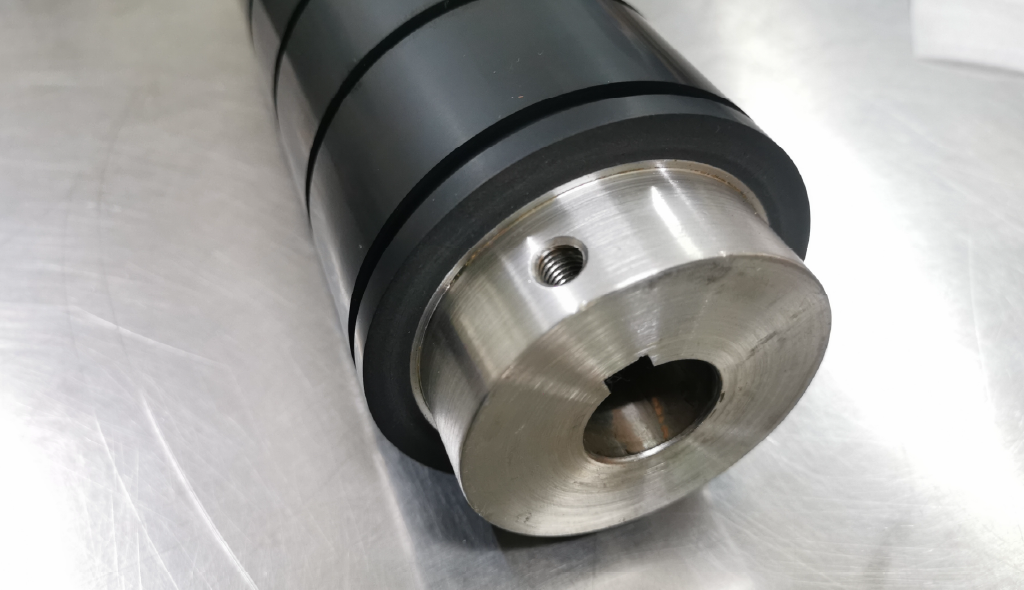
The demands placed on a machine or piece of industrial equipment cannot always be met by a single material. When it is necessary to absorb vibrations, withstand loads or isolate components without compromising their secure attachment, rubber-metal parts offer a solution that combines elasticity and mechanical strength.
How rubber-metal parts are manufactured
The manufacture of rubber-to-metal components requires the design of the part, the materials and the bonding process to be tailored so that both elements work together throughout their service life.
Surface preparation and choice of materials
The process begins with the selection of the elastomer and the metal component. The type of rubber depends on the mechanical requirements of the application and the operating conditions, such as temperature, contact with oils or other chemicals. For the metal part, the geometry, the required strength and the characteristics of the working environment are taken into account.
Surface preparation also plays an important role. Cleaning and pre-treatment must be suited to the chosen materials and the bonding system. Where the process requires it, specific adhesives are applied to promote adhesion between the rubber and the metal.
Moulding and curing of the bond
In many components, the rubber is moulded directly onto the metal insert. During vulcanisation, the elastomer acquires its final properties and, where the system is designed for this purpose, becomes bonded to the metal through a combination of surface preparation, adhesion and controlled process conditions.
Pressure, temperature and time must be adjusted to suit the rubber compound, the mould design and the bonding system. These parameters influence the quality of the part and the integrity of the bond between the two materials. For this reason, the manufacturing process requires careful control to ensure that the component meets the specified requirements.
Industrial applications of rubber-metal components
Rubber-metal components are used in industrial equipment, vehicles and machinery where it is necessary to combine the elasticity of the elastomer with the structural support or fastening provided by the metal.
Vibration absorption and isolation
Rubber anti-vibration mounts are one of their common applications. They are used to reduce the transmission of vibrations between a machine and its supporting structure, as well as to limit the propagation of structural noise in certain installations.
The behaviour of the mount depends on the stiffness of the rubber, the applied load, the excitation frequency and the geometry of the component. A part that is too stiff may transmit more vibration than desired, whilst one that is excessively flexible may cause excessive movement that compromises the equipment’s operation.
Fastening, support and force transmission
Rubber components with metal inserts are also used to secure and support machinery components. The insert allows for the incorporation of anchor points or mounting surfaces, whilst the elastomer absorbs deformations and helps to distribute forces.
Depending on their design, these parts can withstand compressive loads, shear loads or a combination of both. The component’s geometry and the position of the metal insert must be adapted to the stresses it will endure during operation, in order to prevent stress concentrations that could damage the rubber or weaken the bond between the two materials.
What determines the reliability of a rubber-to-metal joint
The joint between the rubber and the metal must withstand the component’s operating conditions. To this end, it is essential to assess the compatibility of the materials, the quality of manufacture and the operational requirements.
Material compatibility and operating conditions
The choice of elastomer must be based on the environment in which the component will operate. Temperature, exposure to chemicals, humidity and contact with oils can alter the properties of the rubber. The load, frequency of stress and amplitude of deformation must also be taken into account.
The bond between the two materials must withstand these conditions without any delamination, cracking or deformation that would prevent the component from fulfilling its intended function. Therefore, the rubber compound and the bonding system must be selected according to the component’s operating conditions and its bond with the metal.
Design, manufacturing control and validation
The shape of the component determines how loads are distributed and the extent to which the elastomer deforms. The thickness of the rubber, the position of the metal insert and the contact areas all influence the mechanical response of the assembly. A suitable design ensures that the component operates within the intended limits and reduces the risk of premature failure.
During manufacture, controlling the moulding and bonding parameters helps to ensure consistency between units. Final checks must meet the requirements of each application and may include dimensional checks, visual inspections or specific tests for adhesion and mechanical behaviour, depending on the component’s requirements.
Manufacture of bespoke rubber components with Moelsi
Every rubber-to-metal part must be suited to the operating conditions for which it is manufactured. The geometry, materials and operational requirements determine how the component is designed and what checks are required during manufacture. At Moelsi, we specialise in bespoke rubber components for industrial applications.
If you need to develop a part that combines an elastomer with a metal insert, please contact our team; we will analyse your project’s requirements and assess the characteristics the component must fulfil.
