Manufacturing with LSR liquid silicone: what is it?
Liquid Silicone Rubber (LSR): Injection Moulding Process and Applications
When a part requires precision, repeatability and stable properties, the manufacturing process is just as important as the choice of material.
In the manufacture of technical parts, liquid silicone rubber (LSR) is commonly processed by injection moulding, a process that is particularly well suited to achieving precise geometries and a high level of repeatability.
What Is Liquid Silicone Rubber (LSR)?
A Material Designed for Injection Moulding
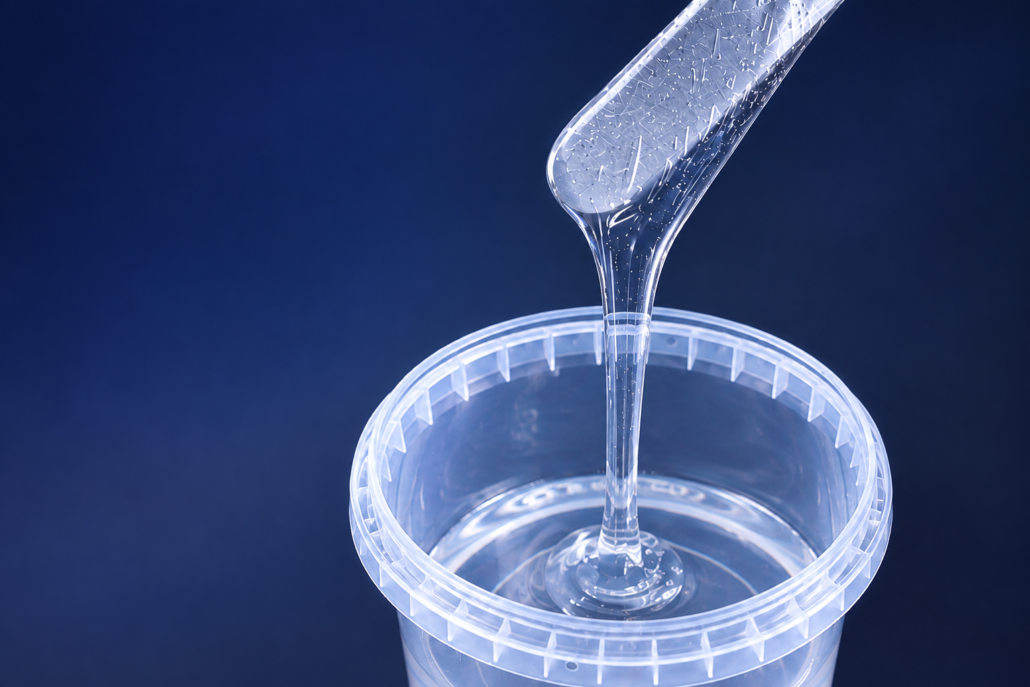
LSR stands for Liquid Silicone Rubber. The material is typically supplied as two components that are metered and mixed before entering the mould. Heat activates the curing system through a platinum-catalysed addition reaction, transforming the silicone into a solid, flexible part with the properties required for the application.
One of the characteristics that affects its processing is its low viscosity. This low viscosity facilitates the filling of mould cavities with complex geometries and makes it possible to work with repeatable production cycles. Dosing, mixing, temperature and injection parameters must be kept under strict control to obtain uniform parts.
What Happens During Curing
The silicone is kept at a low temperature in the dosing and injection system to maintain its flowability. When it enters the hot mould, it fills the cavity while the curing reaction progressively accelerates. The combination of temperature, pressure, injection speed and vulcanization time must be adjusted to the formulation and geometry of the part.
Advantages of Manufacturing with Liquid Silicone Rubber (LSR)
Liquid silicone rubber manufacturing offers properties and production possibilities suitable for different types of technical parts.
Precision, Repeatability and Stability
LSR injection moulding makes it possible to reproduce complex parts with a high degree of repeatability. The material’s flowability facilitates the filling of small cavities and difficult-to-reach areas. Material shrinkage during curing must be considered from the mould design stage to achieve the required dimensional tolerances.
Silicone also offers good elastic recovery and high thermal resistance. It provides resistance to weathering, UV radiation and ozone, as well as good electrical insulation properties.
Depending on the formulation selected, it can be used in applications requiring specific characteristics, such as food contact or certain medical applications.
LSR Silicone vs Solid Silicone
LSR and solid silicone belong to the same elastomer family, but they are processed differently and offer different manufacturing possibilities.
Two Different Manufacturing Processes
The main difference between LSR and solid silicone or HCR (High Consistency Rubber) lies not only in the moulding method, but also in the material’s rheology and processing system. HCR has a high consistency and can be processed by compression, transfer, extrusion or certain injection systems. LSR, on the other hand, is supplied as a two-component liquid system and is processed using specific dosing, mixing and injection equipment.
The liquid format facilitates the manufacture of small parts, complex geometries and components requiring a high level of repeatability. The choice between both systems depends on the part design, tolerances, production volume, required properties and manufacturing conditions. It is also important to highlight that the production advantages of LSR are particularly related to:
- High process automation; less manual intervention than many HCR compression processes.
- Highly repeatable dosing;
- Manufacturing of small parts, complex geometries or thin walls.
- Possibility of producing parts with very little flash when using well-designed moulds;
- Overmoulding and multi-component moulding;
- Fast cycles for certain geometries;
Applications of Liquid Silicone Rubber (LSR) in Different Industries
LSR is used in industries where process precision and material properties meet the requirements of each application.
Medical and Healthcare Applications
In the medical and healthcare sector, LSR can be used to manufacture parts requiring a high degree of purity, flexibility and stability. Applications include components for medical devices, such as nipples or membranes, and elements intended for contact with the human body.
The formulation and process must be adapted in each case to the requirements and standards applicable to the final product.
Food and Consumer Goods Applications
For products intended for food contact, certain LSR formulations make it possible to manufacture flexible components that are resistant to repeated use and stable at different temperatures. Seals, gaskets and flexible components for small appliances could be examples of products designed for repeated use.
Automotive and Electronics Applications
In automotive applications, LSR can be used for seals, membranes, connectors and valves exposed to temperature and demanding environmental conditions. Compatibility with oils, fuels or other fluids must be specifically evaluated according to the formulation; for certain aggressive media, specialised silicones such as fluorosilicone may be required.
In electronics, its insulating properties and resistance to moisture make it suitable for protection, sealing and insulation components.
LSR Manufacturing at Moelsi
At Moelsi, we use LSR technology to manufacture technical silicone parts adapted to the requirements of each project.
A Process Focused on Technical Parts
LSR manufacturing requires material, mould and production parameters to be coordinated from the early stages of development. Geometry, tolerances and operating conditions determine how the process should be designed.
Our experience in manufacturing technical parts allows us to work with LSR when its characteristics meet the requirements of the application, maintaining the necessary control to obtain consistent parts throughout production.
At Moelsi, we work with liquid silicone to manufacture technical parts adapted to each project. Discover our LSR process and explore the possibilities it offers for this type of application.

